


Closing an investigation is more than sending the final report. It is the point where your firm proves that the objective was addressed, evidence was accounted for, invoices were reconciled, and the client knows what happens next. A documented closeout also gives the team a clear record of who completed each step, when it happened, and what remains unresolved.
A private investigator case closure checklist should confirm the investigation objective, final report, evidence handoff, billing status, client notification, retention or disposition instructions, access removal, and lessons learned. Record an owner, completion date, and supporting evidence for each item so another person can audit the file without relying on memory.
View CROSStrax pricing and plans
Use the checklist with the applicable law, contract, client instructions, and professional obligations in mind. Start by defining what a complete and defensible closeout must confirm before the file is archived.
By CROSStrax
What should a private investigator case closure checklist confirm?
A case is not ready to close simply because the fieldwork is finished. The first-pass review should show that the assignment met its defined objectives. The record should be complete enough for the client and firm to use. No unresolved task should disappear into an inbox or investigator’s notebook. Organized case tracking and consistent reporting make this review easier to perform the same way across domestic, legal, insurance, corporate, and other investigative assignments.
Start by comparing the completed work with the original scope. Record which objectives were met, which were limited by circumstances, and which were not authorized or possible. Identify open questions, missing documentation, follow-up commitments, or items awaiting a client decision. Each unresolved item needs a named owner and a due date. That remains true when the decision is to carry it into a new assignment rather than leave the case nominally open.
The reviewer should also confirm that the final report reflects the underlying case record and follows the firm’s reporting standard. Documentation may support professional or court-related requirements, so accuracy, traceability, and a clear approval trail matter. This is a useful control against inconsistent report quality, one of the common operational pain points for investigative teams.
Reusable case closure review
- Objectives: Are the assignment goals and requested deliverables clearly marked complete, partial, or not completed?
- Scope: Does the record identify approved work, scope changes, exclusions, and client instructions?
- Unresolved items: Are open questions, missing records, follow-ups, and dependencies listed plainly?
- Ownership and dates: Does every remaining action have a responsible person and a specific review or completion date?
- Records: Do the report, notes, attachments, activity history, and supporting documentation agree?
- Billing: Have time, expenses, invoices, credits, and approvals been checked for gaps before closure?
- Communication: Has the client received the agreed status or final notice, and is that communication recorded?
- Approval: Has the designated reviewer approved closure, with the approval date and any conditions documented?
Use the checklist as an auditable decision point, not a box-ticking exercise. A reliable closeout confirms the status of the work, billing, client communication, and records together. That prevents administrative gaps from surfacing after the file is treated as finished and gives the firm a consistent standard for every case.
How do you complete the final report and evidence handoff?
A strong closeout makes the work understandable to the client and defensible for the firm. Review the report and evidence as one package, then record who received it, what was retained, and what happens next. This matters because inconsistent report quality and compliance documentation needs are documented investigator pain points.
- Review the final report against the assignment. Confirm that the requested questions are answered, the scope and dates are clear, and findings are separated from assumptions or unresolved items. Check names, identifiers, chronology, attachments, and conclusions against the underlying case record. The report should be consistent enough for another authorized team member to follow the work without reconstructing it from scattered notes. For additional context, see these electronic investigation reports.
- Build an evidence index. List each photo, video, document, interview record, log, and other relevant item with a meaningful identifier. Include its relationship to the report, source or collection context, date received or created when known, and current location. Evidence management guidance addresses both evidence and property. Include items that must be returned, transferred, stored, or otherwise accounted for, not only files cited in the narrative. For video-specific practices, review this guide to video evidence management.
- Check preservation and file integrity. Confirm that the delivered files open correctly, match the index, and have not been accidentally renamed, truncated, or replaced during export. Preserve the original where your policy, contract, client instructions, and applicable obligations require it, and distinguish working copies from final or original materials. NIST and the National Institute of Justice assembled multidisciplinary recommendations covering evidence retention, preservation, integrity, and disposition. That guidance is a useful reference, not a substitute for your governing requirements.
- Complete the handoff. Use an approved delivery method, identify the recipient, record the date and package contents, and obtain an acknowledgment when appropriate. Note any access instructions, passwords delivered separately, outstanding questions, or limits on the package. A clear handoff reduces later confusion about what the client received and who owns the next action.
- Record disposition and close the record. Document whether each item was returned, transferred, retained, or securely disposed of, along with the responsible person and date. Treat the OSAC document on on-scene collection and preservation of physical evidence as a proposed reference, not universal legal advice. Confirm its relevance with applicable law, contract terms, client instructions, and professional obligations before relying on it.
Store the completed report, index, handoff record, and disposition notes together in the case file.
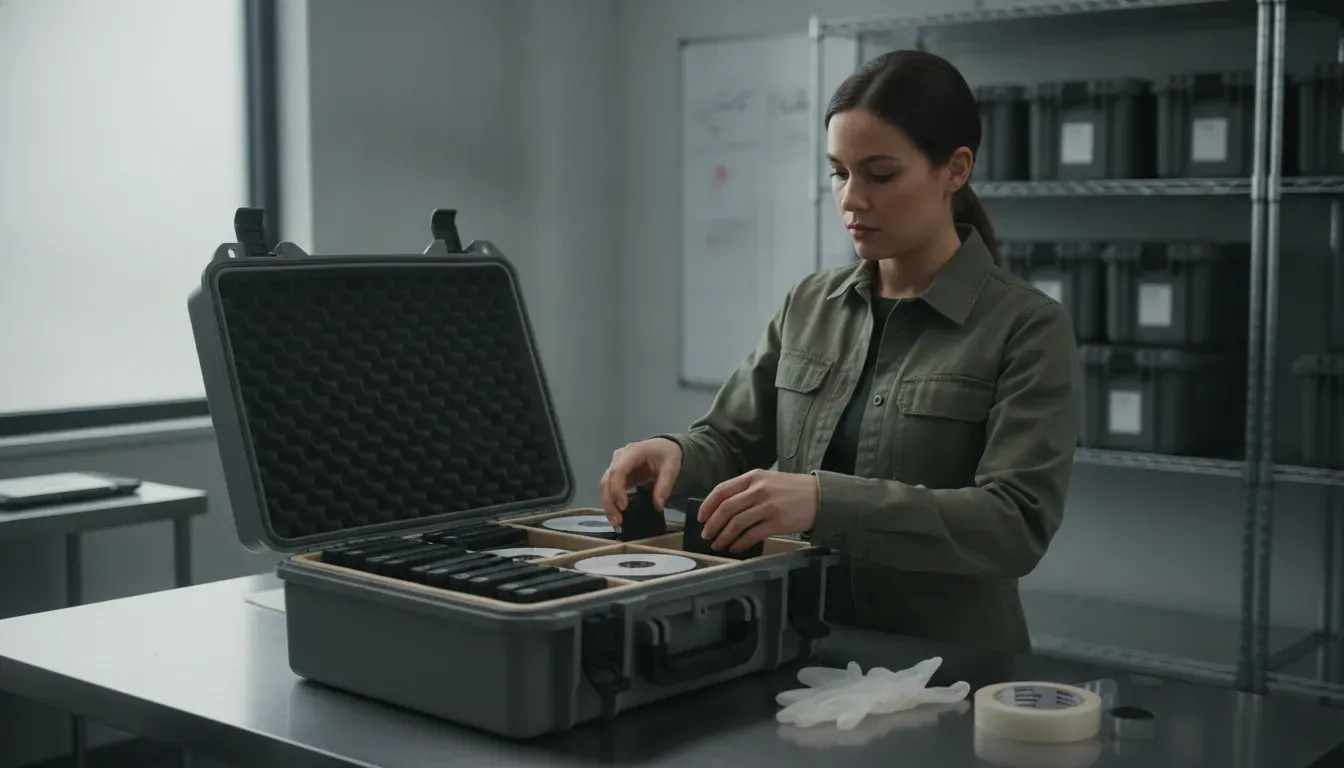
A closeout process should make reliable records and clear status communication routine, while preventing evidence or access-control gaps from being hidden by a case status marked complete.
How should billing and client communication be closed?
Close the financial and communication sides of an investigation together. A final report should not be considered complete while time, expenses, invoice status, or client-facing updates remain uncertain. Billing and invoicing inefficiencies, along with limited client communication, are recognized operational pain points for investigative firms.
Start with a reconciliation review. Compare the work recorded in the case with the assignment, approved scope, and supporting records. Confirm that all investigator time and reimbursable expenses have been entered, assigned to the correct case, and reviewed for duplicates or omissions. Then document the current invoice status, including whether it is ready for review, issued, paid, disputed, or awaiting information.
- Reconcile recorded time and expenses against completed assignments and deliverables.
- Confirm the invoice status and note any credits, balances, adjustments, or unresolved questions without adding unsupported price details.
- Identify the person responsible for the next billing action and record its expected date.
- Save the supporting records with the case so another team member can understand the closeout.
Use the final client message to make the handoff unambiguous. State that the assigned work is complete, summarize the deliverables provided, and identify any limitations or items that remain open. If files are being delivered separately, list them clearly and explain how the client can confirm receipt. A practical investigation billing workflows reference can help firms connect field activity, reporting, client updates, and billing in one closeout process.
End with the next contact point. Tell the client who to reach if a clarification, additional document, or follow-up assignment becomes necessary. After sending the message, record the date, recipient, delivery method, and any response in the case record. For firms handling sensitive documents or ongoing client relationships, consistent secure client communication helps preserve a clear history from intake through closure.
Finally, mark the case closed only after the billing review and client notification are documented. That final status should show what was delivered, what remains financially open, who owns the next action, and when the record was completed.
What records, access, and retention steps belong in the checklist?
Closeout is not complete when the final report is sent. The firm should also confirm that records are organized, access is appropriate, and every item has a documented next step. This protects continuity when a client asks a follow-up question and helps prevent billing, evidence, or access-control gaps.
There is no universal retention period that applies to every private investigation. Before retaining, returning, or destroying anything, confirm the applicable law, contract terms, client instructions, and your firm’s professional obligations. The checklist below gives each record type an owner and a decision point without treating it as legal advice.
| Record type | Closeout action | Owner | Retention decision |
|---|---|---|---|
| Evidence and property | Verify the inventory, identifiers, chain-of-custody notes, transfer or return details, and any preservation hold. Record what happened to each item. | Lead investigator, with the case manager or evidence custodian | Retain, return, transfer, or dispose only after checking the engagement terms, client direction, applicable law, and professional requirements. |
| Client records | Finalize the report, supporting communications, authorizations, deliverables, and closeout notice. Use consistent naming and place the final versions in the designated case record. | Case manager or assigned investigator | Document the governing retention basis and review date. Separate the official record from working copies and duplicates. |
| Financial records | Reconcile time, expenses, invoices, payments, credits, and outstanding balances. Link the final billing record to the case before changing its status. | Billing owner or firm administrator | Follow the firm’s accounting process and the retention requirements that apply to the business and engagement. Do not delete records simply because the investigation is closed. |
| Access records | Remove or change access for former staff, contractors, client users, shared links, connected services, and temporary credentials. Review permissions on stored files and exports. | System administrator or designated operations owner | Retain an access-change record when needed for accountability. Keep only access that has a current business purpose, with a review date for exceptions. |
For evidence handling, NIST and the National Institute of Justice identify retention, preservation, integrity, and disposition as distinct management concerns, covering both evidence and property. Those principles support a documented lifecycle rather than an informal deletion habit. The related committee work also emphasizes practice improvement through education and engagement. See the NIST and NIJ evidence-management guidance for context.
Finally, record the person who completed each check, the date, and any exception requiring review. A structured platform can help firms track, organize, report, bill, and communicate about investigative work, but the firm still owns the underlying retention decision.
What should a firm learn after closing a private investigator case?
Case closure should give the firm more than a completed file. It should show where the work moved smoothly, where information was delayed, and what the next team can do better. Set aside a short retrospective while the details are still fresh. Keep it factual and focused on improving the process, not assigning blame.
Start by comparing the original assignment with the final outcome. Did the scope remain clear? Were assignments visible to everyone who needed them? Note where an investigator waited for instructions, duplicated work, or had too much or too little of the load. Difficulty managing assignments and manual case tracking are common operational pain points, so a closeout review should identify the specific handoff or tracking step that caused friction.
Review the final report and billing record together. Look for report rework, missing attachments, unclear time entries, invoice corrections, or questions that could have been answered before delivery. Inconsistent report quality and billing and invoicing inefficiencies are not just end-of-case annoyances. They are signals that a template, review checkpoint, or approval owner may be missing. Record the correction and the point in the workflow where it should have been caught.
Then capture the client’s questions. A request for clarification may reveal that the report structure, status updates, or evidence explanation was not clear enough. Limited client communication can also leave avoidable uncertainty at the end of an assignment. Compare the questions across cases rather than treating each one as an isolated complaint.
Turn one finding into an owned change. For example: “Operations manager will add a final report and invoice review checkpoint to every case, beginning September 15.” Assign one owner, one due date, and one measure. That measure might be fewer returned reports or billing corrections during the next month. Store the result with the case record so the lesson can be revisited. A consistent investigator team collaboration process makes those patterns easier to see across assignments.
This practice reflects the broader goal of evidence-management improvement: use education and engagement to strengthen repeatable practices, as NIST and NIJ describe in their evidence-management work. Read the NIST and NIJ guidance for context, then adapt the review to your firm’s contracts, policies, and professional obligations.
View CROSStrax pricing and plans
Frequently Asked Questions
When is a private investigation case ready to close?
A case is ready to close when the agreed objectives have been addressed and the final report has been reviewed. Evidence and working records are accounted for, billing is reconciled, and the client has received a clear status update. Confirm that no open assignment, approval, evidence request, or promised follow-up remains.
What should be included in a private investigator case closure checklist?
Include the case outcome, objective-by-objective review, final report, evidence inventory, and file locations. Add billing and invoice status, client notification, retention or disposition instructions, access removal, and a short lessons-learned review. Assign an owner and completion date for each item so the closeout can be audited later.
How should investigative evidence be handled at case closure?
Record what was collected, where it is stored, who has access, and whether it was returned, retained, transferred, or securely disposed of. Apply the client agreement, applicable law, and professional obligations rather than assuming one retention period fits every matter. Preserve the records needed to explain their integrity and chain of custody.
Should a client receive a formal case-closure notice?
Yes. Send a concise notice that states the work completed, the final deliverables provided, any unresolved limitations, the billing status, and the next step for future requests. Keep a copy of the notice and delivery record in the case file.
What happens after the case is marked closed?
Remove access that is no longer needed, confirm retention and disposition dates, archive the final record, and document one or two process improvements. A brief review can reveal recurring issues such as manual tracking, inconsistent reports, assignment confusion, billing delays, or limited client communication.
Get started with a more consistent case closeout
A repeatable closeout process helps your team keep reports, evidence, billing, client communication, and access steps together as each investigation wraps up. CROSStrax case management software can give your firm a structured place to manage those workflows and review what needs attention. Explore the available options and decide whether they fit your team’s process.
